
14 min read
Real Estate for Retirement Income: Building Wealth Beyond Traditional Investments
Written on December 18, 2025 By Ron McVaney
Ready to start investing in Texas real estate?
Book Your Free Call Today
Traditional retirement planning advice has remained remarkably unchanged for decades: max out your 401(k), diversify with mutual funds, maybe buy some bonds, and hope the market cooperates when you need the money.
But what if there's a better way to secure your retirement?
What if you could generate consistent monthly income backed by real assets, participate in appreciation, and avoid the volatility that keeps retirees up at night?
Real estate for retirement income offers exactly that opportunity. More specifically, strategic real estate investments in high-growth markets like Texas provide a proven path to building retirement wealth that traditional investment vehicles simply can't match.
This comprehensive guide explores why retirement planning real estate investments deserve a central role in your portfolio and how you can access these opportunities without becoming a landlord or real estate expert.
Why Traditional Retirement Planning Falls Short
Before diving into real estate strategies, it's worth examining why conventional retirement planning often disappoints.
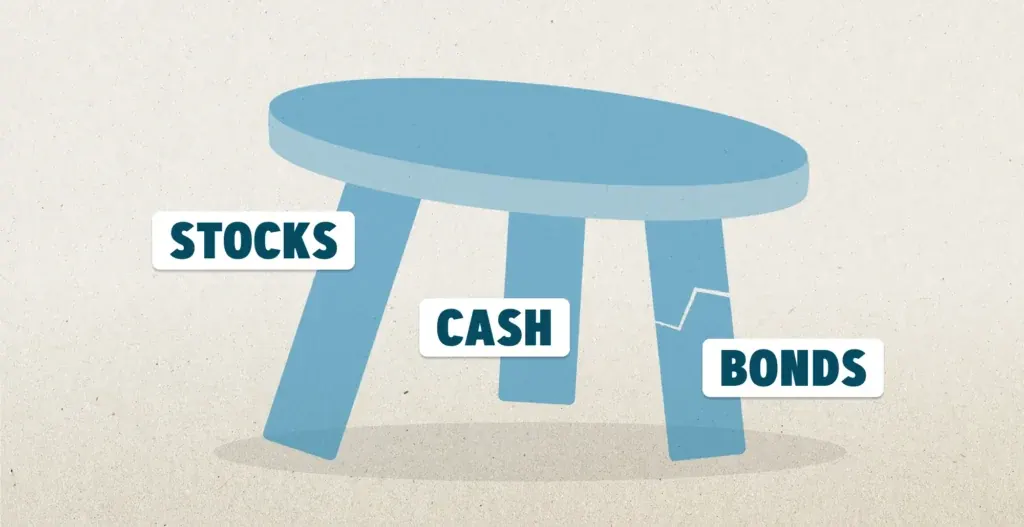
The typical retirement portfolio relies heavily on stocks and bonds. While these investments have their place, they come with significant limitations:
Market Volatility
Stock market crashes don't time themselves around your retirement date. The sequence of returns matters enormously. If you retire into a bear market and need to sell shares to fund living expenses, you lock in losses and reduce your portfolio's ability to recover.
Low Bond Yields
With interest rates having been historically low for extended periods, bonds that once provided reliable income now offer returns that barely keep pace with inflation.
Lack of Control
You're at the mercy of market forces, Federal Reserve decisions, corporate earnings reports, and global economic conditions. There's no opportunity to actively improve your returns through strategic management.
No Tangible Asset Backing
Stocks and bonds are paper assets. When markets panic, values can evaporate quickly. There's no physical asset providing inherent value or utility.
Inflation Erosion
Fixed income from annuities or bonds loses purchasing power over time. A $4,000 monthly payment today won't have the same buying power in 20 years.
These limitations explain why savvy investors increasingly turn to real estate as a core component of their retirement strategy.
Why Real Estate Makes Sense for Retirement Income
Real estate has created more wealth than any other asset class in American history. For retirement planning, real estate offers several compelling advantages:
Tangible Asset with Inherent Value
Unlike stocks that can drop to zero or bonds dependent on a company's ability to pay, real estate is a physical asset with utility. Land, in particular, has inherent scarcity value. They're not making any more of it, especially in high-growth areas.
Multiple Profit Centers
Real estate provides two ways to build wealth:
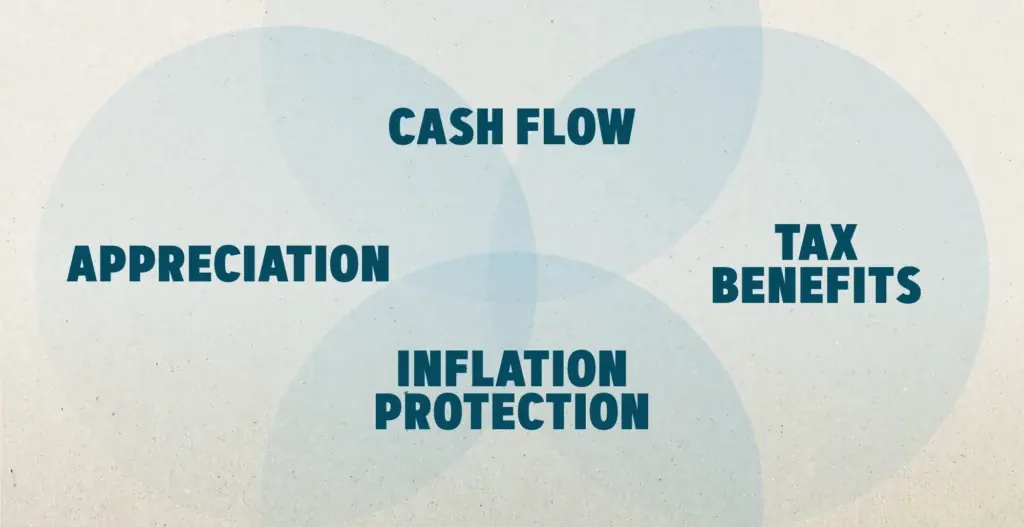
Cash Flow: Regular income from rents, lease payments, or distributions
Appreciation: Property value increases over time, particularly in growing markets
This dual benefit means you're earning income while your principal investment grows, compounding your returns in ways that pure income investments can't match.
Inflation Protection
Real estate naturally hedges against inflation. As costs rise, so do rents and property values. Your income and asset value both increase with inflation, protecting your purchasing power throughout retirement.
Tax Advantages
Real estate offers numerous tax benefits that stocks and bonds can't provide. Depending on the structure, investors may benefit from deductions, depreciation, and favorable capital gains treatment.
Portfolio Diversification
Real estate performs independently of stock market cycles. When equities decline, well-selected real estate often maintains or increases value, providing true diversification beyond the traditional 60/40 stock-bond allocation.
Different Real Estate Strategies for Retirement
Not all real estate investments are created equal, and different strategies serve different retirement needs.
Rental Properties: The Traditional Approach
Many people think of rental properties when considering real estate for retirement income. Buy a house or apartment building, rent it out, collect monthly checks.
Advantages:
- Direct control over the asset
- Potential for strong cash flow
- Building equity through mortgage paydown
- Tax benefits including depreciation
Disadvantages:
- Requires active management or paying a property manager
- Tenant issues, maintenance, and unexpected repairs
- Significant capital required for down payments
- Liquidity challenges when you need to sell
- Concentration risk if you own only a few properties
For retirees, the management burden often outweighs the benefits. The 3 AM phone call about a broken pipe isn't most people's idea of a relaxing retirement.
REITs: Passive but Limited
Real Estate Investment Trusts provide stock-like liquidity with real estate exposure. You can buy and sell shares easily, and REITs must distribute 90% of taxable income as dividends.
Advantages:
- Complete liquidity
- Professional management
- Diversification across properties
- Low minimum investment
Disadvantages:
- Subject to stock market volatility
- No control over property selection or management
- Dividends taxed as ordinary income
- Management fees reduce returns
- Often focused on income-producing properties with limited appreciation potential
REITs solve the management problem but reintroduce market volatility and offer limited upside compared to direct real estate ownership.
Land-Backed Investment Funds: The Strategic Alternative
An increasingly popular option for retirement planning real estate investments is land-backed funds that focus on strategic acquisitions in high-growth markets.
This approach combines the benefits of direct real estate ownership with the passive nature of managed investments, while targeting superior returns through value-enhancement strategies.
How It Works:
- Funds acquire strategically located land in high-growth markets
- Professional teams handle rezoning, entitlement, and development preparation
- Land value increases significantly through these enhancements
- Properties sell to developers at 2X to 3X purchase price
- Investors receive regular distributions plus equity participation in profits
Advantages:
- Completely passive, no management required
- Real asset backing with inherent scarcity value
- Higher return potential than rental properties or REITs
- Regular cash flow plus appreciation
- Professional management and expertise
- Focus on value creation, not just income collection
This strategy is particularly effective for retirement planning because it provides the income retirees need while participating in the appreciation that builds long-term wealth.

Why Texas Real Estate for Retirement Planning
Location matters enormously in real estate investing. Not all markets offer the same growth potential or stability. Texas stands out as particularly attractive for building retirement wealth.
Unstoppable Population Growth
Texas has been one of the fastest-growing states for years, with no signs of slowing. People and businesses continue migrating from high-tax, high-cost states to Texas's more favorable environment.
This population growth creates sustained demand for housing, commercial space, and infrastructure, all of which require land.
Business-Friendly Environment
Texas offers no state income tax, reasonable regulations, and a pro-business climate. Major corporations continue relocating headquarters and opening facilities throughout the state, bringing high-paying jobs and further fueling growth.
Diversified Economy
Unlike some states dependent on one or two industries, Texas has a diversified economy spanning energy, technology, healthcare, manufacturing, aerospace, and agriculture. This diversity provides stability and reduces risk.
Infrastructure Investment
Texas continues investing heavily in infrastructure, highways, airports, and utilities. This investment supports continued growth and increases the value of strategically located land near expanding infrastructure.
Geographic Advantage
Texas's size and central location make it a logistics hub. Companies serving national markets benefit from Texas's position, driving continued commercial development.
For retirement planning Texas real estate offers a unique combination of growth, stability, and opportunity that few other markets can match.
FISYN's Approach: Retirement Income Through Strategic Land Investment
Understanding the power of Texas real estate for retirement is one thing. Accessing it effectively without becoming a real estate professional is another.
This is where FISYN's proven approach comes in, offering retirees and pre-retirees a turnkey solution for generating retirement income through real estate.
The Buy, Rezone, Sell Strategy
FISYN specializes in a focused strategy that maximizes returns while minimizing holding periods and risks:
Step 1: Strategic Acquisition
FISYN identifies and acquires undervalued land in high-growth Texas corridors. This isn't random speculation. Properties are selected based on:
- Strong economic growth indicators
- Infrastructure development plans
- Developer demand in the area
- Clear rezoning and appreciation potential
- Conservative underwriting with focus on downside protection
Step 2: Value Enhancement
Once acquired, FISYN's experienced team works with city planners and regulatory bodies to:
- Secure zoning changes that increase land value
- Obtain necessary entitlements and permits
- Prepare the land for development
- Create "shovel-ready" properties developers actively seek
This is where the magic happens. Rezoning land from agricultural to commercial or residential use can double or triple its value, sometimes in a matter of months.
Step 3: Strategic Exit
With enhanced value and developer interest secured, FISYN sells properties at significant multiples of the purchase price. The typical exit occurs within 18 to 24 months, generating profits that are distributed to investors.
What This Means for Your Retirement
This strategy addresses the key challenges retirees face:
Consistent Income
Investors receive targeted annual distributions of 10% to 12%, paid monthly. This provides the steady income stream retirees need without the volatility of dividends that can be cut or market values that fluctuate.
Equity Participation
Beyond regular income, investors participate in 20% of the appreciation when properties sell. This provides the growth component necessary to build long-term wealth and combat inflation.
Asset-Backed Security
Every dollar invested is backed by actual Texas land. There's real, tangible value underlying your investment, not just promises or market sentiment.
Zero Management Required
FISYN handles everything. Investors don't deal with tenants, repairs, zoning meetings, or any operational aspects. It's truly passive income.
No Debt Exposure
All acquisitions are made with cash, eliminating leverage risk. In uncertain economic times, having investments with no debt attached provides important downside protection.
A Decade of Proven Performance
Track records matter when planning your retirement. FISYN has delivered consistent results for investors over an extended period:
- 10 consecutive years of double-digit returns
- 5-year average return (2019-2023): 31.3%
- Strong performance across different market conditions
- Consistent execution of the buy, rezone, sell strategy
These aren't projections or hypothetical returns. They're actual results delivered to real investors who were building their retirement wealth through strategic real estate.
Consider what these returns mean for retirement planning. A $100,000 investment growing at 31.3% annually for five years becomes over $400,000. Even at more conservative 15% annual returns, that same $100,000 becomes $200,000 in five years.
This kind of growth, combined with monthly income distributions, provides both the immediate cash flow retirees need and the long-term appreciation that ensures their money lasts.
Building a Real Estate Retirement Portfolio Strategy
How should real estate fit into your overall retirement plan? Here's a framework for thinking strategically about retiring with real estate cash flow.
Assess Your Retirement Income Needs
Start by calculating your expected retirement expenses and income sources:
- Social Security benefits
- Pension income (if applicable)
- Required minimum distributions from retirement accounts
- Gap between expenses and guaranteed income sources
This gap represents the income you need from investments. Real estate can fill this gap with more predictability and less volatility than traditional portfolios.
Determine Your Real Estate Allocation
A common approach is to allocate 20% to 40% of your investment portfolio to real estate, depending on:
- Your risk tolerance
- Timeline to retirement
- Other income sources
- Desire for active versus passive management
- Need for liquidity
Younger investors with longer time horizons might allocate more aggressively to growth-oriented real estate. Those closer to or in retirement might focus on income-producing real estate with stable cash flow.
Diversify Within Real Estate
Even within real estate, diversification matters. Consider:
- Geographic diversification (though focusing on strong markets like Texas makes sense)
- Property type diversification (land, commercial, residential)
- Strategy diversification (income-focused vs appreciation-focused)
However, don't over-diversify to the point of diluting returns. Sometimes concentrated bets on high-quality opportunities in proven markets outperform broadly diversified approaches.
Balance Liquidity Needs
Real estate is generally less liquid than stocks or bonds. Ensure you maintain adequate liquid reserves for:
- Emergency expenses
- Short-term spending needs
- Opportunities that require quick access to capital
A common rule of thumb is to keep 1-2 years of expenses in liquid accounts, allowing your real estate investments time to perform without forced liquidation.
Plan for Tax Efficiency
Work with a tax professional to structure your real estate investments tax-efficiently:
- Consider which accounts (taxable vs retirement) are optimal for real estate investments
- Understand how different real estate structures are taxed
- Plan for required minimum distributions from retirement accounts
- Coordinate real estate income with Social Security and other income sources
Growing Retirement Wealth with Real Estate: A Case Study
Let's examine how strategic real estate investing could transform a typical retirement scenario.
Traditional Approach:
John, age 55, has $500,000 in retirement savings, invested in a traditional 60/40 stock-bond portfolio. Assuming 7% average annual returns, his portfolio might grow to $1 million by age 65.
At retirement, following the 4% withdrawal rule, John could safely withdraw $40,000 annually ($3,333 monthly) while preserving his principal.
Real Estate-Enhanced Approach:
John allocates $200,000 (40%) to strategic Texas land investments targeting 15% annual returns with monthly distributions, keeping $300,000 in traditional investments.
Traditional portfolio growth (7% on $300,000): $590,000 after 10 years
Real estate portfolio growth (15% on $200,000): $809,000 after 10 years
Total portfolio value: $1,399,000
At retirement, John's options expand significantly:
- His traditional portfolio supports $23,600 annual withdrawals (4% rule)
- His real estate investments provide ongoing distributions of approximately $80,900 annually (assuming 10% on the $809,000 balance)
- Total retirement income: $104,500 annually ($8,708 monthly)
That's 2.6 times more monthly income than the traditional approach, plus John still has substantial principal that continues growing.
This example illustrates why growing retirement wealth with real estate provides advantages traditional portfolios struggle to match.
Common Questions About Real Estate for Retirement Income
Isn't real estate risky?
All investments carry risk. However, real estate backed by tangible assets in growing markets with no debt provides different risk characteristics than stocks or bonds. The key is investing with experienced managers who understand local markets, practice conservative underwriting, and have proven track records.
What if I need my money quickly?
Real estate investments are generally illiquid compared to stocks. This is why maintaining adequate liquid reserves is crucial. However, this illiquidity often contributes to higher returns, as you're compensated for committing capital for longer periods.
How much do I need to invest?
Minimum investments vary by opportunity. Some land-backed funds have minimums as low as $1,000, making real estate accessible to investors at various wealth levels. Others require $25,000 or more for accredited investors seeking higher targeted returns.
Do I need to be a real estate expert?
No. The beauty of investing with professional real estate firms is that you benefit from their expertise without needing to become an expert yourself. They handle acquisition, management, enhancement, and sale while you receive passive income and appreciation.
What about my age? Is it too late?
Real estate can play a role at any age. Younger investors might focus more on appreciation, while those closer to retirement prioritize income. Even retirees benefit from real estate's inflation protection and steady income that doesn't depend on market timing.
Getting Started: Invest for Retirement with FISYN
If you're ready to explore how building retirement wealth Texas real estate could transform your retirement outlook, here's how to begin:
Educate Yourself
Understanding the fundamentals of real estate investing and specifically how land-backed strategies work is the first step.
Take time to learn about:
- How Texas markets are performing
- The buy, rezone, sell strategy
- Expected returns and risks
- How distributions and equity participation work
Assess Your Financial Situation
Review your current portfolio, retirement timeline, income needs, and risk tolerance. Determine how much you could realistically allocate to real estate without compromising liquidity needs.
Review the Track Record
Past performance doesn't guarantee future results, but a consistent track record demonstrates capability and execution. FISYN's decade of double-digit returns shows consistent execution across different market conditions.
Understand the Terms
Before investing, ensure you clearly understand:
- Targeted distribution rates
- Equity participation structure
- Expected holding periods
- Minimum investment requirements
- How and when you can access your funds
- All fees and costs
Start with a Manageable Amount
You don't need to commit your entire portfolio immediately. Many investors start with a smaller allocation to gain comfort with the strategy and see results before increasing their investment.
[H3] Connect with FISYN
The best way to determine if strategic Texas land investment fits your retirement plan is to have a conversation with FISYN's team. They can explain current opportunities, answer specific questions about your situation, and help you understand how this approach could complement your existing retirement strategy.
The Future of Retirement Income
Retirement planning is evolving. The old model of working for 40 years, maxing out your 401(k), and hoping everything works out is being replaced by more strategic approaches that leverage multiple income streams and asset classes.
Real estate for retirement income, particularly through proven strategies in high-growth markets like Texas, represents one of the most compelling opportunities available to today's retirement planners.
The combination of regular monthly distributions, equity participation in appreciation, real asset backing, and professional management addresses the key challenges retirees face: generating consistent income, protecting against inflation, avoiding excessive volatility, and building wealth that lasts throughout retirement.
FISYN's track record of delivering strong returns through strategic land investment in Texas demonstrates that this isn't theoretical. It's a proven approach that has helped investors build retirement wealth for over a decade.
Whether you're decades from retirement and building your nest egg or approaching retirement and focusing on income generation, retiring with real estate cash flow deserves serious consideration in your overall strategy.
The question isn't whether real estate should be part of your retirement plan. The question is how much, and with whom. For investors seeking passive, professional management with a proven track record in one of America's strongest growth markets, FISYN provides a compelling answer, so feel free to book a call with one of our investment consultants today.
Your retirement security is too important to leave entirely to the whims of the stock market or the modest returns of traditional fixed income. Strategic real estate investment in Texas offers a better path forward, one backed by tangible assets, professional expertise, and a decade of consistent results.
Important Disclosure: This article is for educational purposes only and does not constitute financial or tax advice. Past performance does not guarantee future results. All investments carry risk, including the potential loss of principal. Real estate investments are typically illiquid and may not be suitable for all investors. The targeted returns and distribution rates discussed are targets and not guarantees. Please consult with a qualified financial professional before making investment decisions.