
14 min read
Diversifying Beyond Stocks in Retirement
Written on June 11, 2026 By Ron McVaney
Ready to start investing in Texas real estate?
Book Your Free Call Today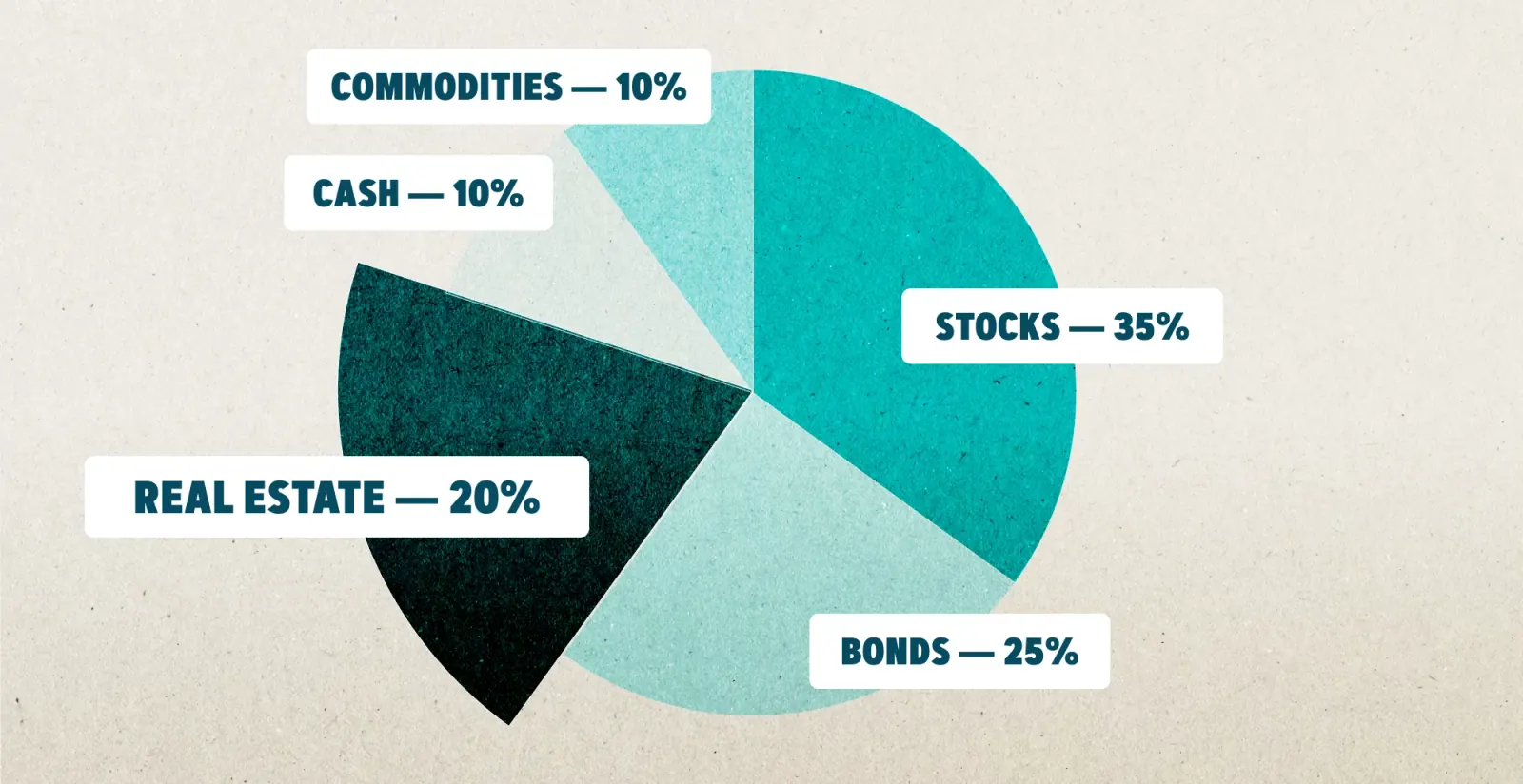
For decades, the standard retirement advice was simple: invest heavily in stocks while young, gradually shift toward bonds as you age, and you'll be fine. This advice served accumulation-phase investors reasonably well when time horizons were long and market downturns were recoverable setbacks rather than portfolio-threatening events.
Retirement changes everything about how investment risk affects you. The strategies that built your wealth may not be the same strategies that protect and sustain it. Understanding why diversification beyond stocks matters in retirement—and what specific asset classes provide what specific protections—is one of the most important transitions retirement investors must make.
This guide examines why stocks alone create retirement-specific vulnerabilities, what role bonds, cash, commodities, and real estate each play in a diversified retirement portfolio, and why thoughtful allocation across multiple asset classes provides security that any single asset class cannot.
Note: The allocation considerations discussed in this article are general suggestions for educational purposes only. Every individual's financial situation is different. Please consult with a qualified financial professional before making any investment decisions.
Why Retirement Changes Everything About Investment Risk
The shift from accumulation to distribution fundamentally changes how market volatility affects your financial security.
The Accumulation vs Distribution Difference
During your working years, market downturns are inconvenient but recoverable. A 30% portfolio decline hurts on paper, but continued contributions and time allow recovery. You're adding to your portfolio regularly, effectively buying more shares at lower prices during downturns.
In retirement, this dynamic reverses completely. You're withdrawing from your portfolio rather than adding to it. A 30% decline now means selling assets at depressed prices to fund living expenses, permanently removing capital that cannot recover because you're taking money out, not putting money in.
This withdrawal reality transforms market volatility from a temporary inconvenience into a potential permanent impairment of retirement security.
Sequence of Returns Risk: The Retirement-Specific Threat
Sequence of returns risk describes how the timing of market returns, not just their average, determines retirement outcomes. Two retirees with identical average returns over 20 years can have dramatically different outcomes depending on whether poor returns occur early or late in retirement.
Poor returns early in retirement, when portfolios are largest and withdrawals have just begun, create compounding damage. Each withdrawal at a depressed price removes more shares than the same dollar amount would remove at higher prices. Those missing shares aren't there to participate in subsequent recoveries.
This sequence risk doesn't exist during accumulation because you're not forced to sell at depressed prices. It becomes a central retirement risk the moment withdrawals begin.
Time Horizon Compression
Accumulation investors with 20 to 30 year horizons can ride out prolonged bear markets. Retirement investors with the same nominal horizon face a different reality: they need income now, not after a potential decade-long recovery.
This time horizon compression means retirement portfolios cannot simply wait for markets to recover. They need income regardless of what markets are doing, which means some portion of the portfolio must provide stability even when other portions are declining.
Why Stocks Alone Aren't Enough in Retirement
Stocks provide essential long-term growth potential that retirement portfolios need, but relying exclusively on stocks creates vulnerabilities that retirement specifically amplifies.
Volatility Creates Forced Selling
Stock markets decline regularly. Bear markets, defined as declines of 20% or more, have occurred multiple times in every decade. During accumulation, these are buying opportunities. During retirement income distribution, they're forced selling events.
When your retirement income plan requires monthly withdrawals and your stock portfolio has declined 30%, you're selling stocks at deeply discounted prices simply to pay living expenses. This forced selling at low prices represents a permanent loss of capital that hampers recovery even when markets eventually rebound.
Dividends Aren't Guaranteed
Many retirees rely on dividend income from stock holdings to supplement Social Security and other income sources. This strategy works during stable periods but faces a fundamental problem: companies cut dividends during the economic stress that typically accompanies market downturns.
The dividend income that supported your retirement income plan during planning may be substantially reduced during the difficult periods when you most need reliable income. Dividends provide income potential, not income certainty.
Emotional Decision-Making Amplifies Losses
Market volatility that retirement investors can intellectually accept becomes psychologically challenging when it affects the portfolio they're depending on for living expenses. The fear of watching retirement savings decline often drives selling at market lows—crystallizing losses that patient holding would have recovered.
Research consistently shows that individual investors underperform the investments they hold because they sell during downturns and buy during rallies. This behavioral gap is more damaging in retirement, when the cost of mistimed decisions is higher and recovery time is shorter.
Concentration Risk in Any Single Asset Class
No matter how well-diversified your stock portfolio is across sectors, geographies, and market capitalizations, it remains exposure to a single asset class. Events that affect equity markets broadly—financial crises, pandemic disruptions, systemic economic shocks—affect all stocks simultaneously.
Genuine diversification requires exposure to asset classes that respond differently to economic conditions, not just different stocks within the same asset class.
Why Bonds Deserve a Place—But Aren't the Complete Answer
Bonds provide stability that stocks don't, but they carry their own retirement income limitations.
What Bonds Do Well
Investment-grade bonds provide predictable income through regular interest payments and return of principal at maturity. They typically decline less than stocks during equity market stress, providing portfolio stability when stock allocations are falling.
This stability serves retirement portfolios by providing a more predictable income component that doesn't require selling at depressed prices during equity downturns.
Where Bonds Fall Short
The stability bonds provide comes at a cost: returns that may barely keep pace with inflation after taxes. In high-inflation environments, bond returns can produce negative real returns—your nominal income is positive, but your purchasing power is declining.
Additionally, rising interest rates reduce existing bond values, creating the particularly damaging combination of both reduced purchasing power from inflation and capital losses from rate-driven price declines. The 2022 environment illustrated this, with both stocks and bonds declining simultaneously, undermining the traditional diversification argument for stock-bond portfolios.
Long-duration bonds amplify this interest rate risk. For retirement investors who need capital preservation over potentially 30-year horizons, the sensitivity of long bonds to rate changes creates meaningful volatility that contradicts their stability reputation.
The Role Bonds Should Play
Despite limitations, bonds serve specific retirement portfolio roles: providing income certainty for near-term expenses, reducing overall portfolio volatility, and offering a reserve that can be rebalanced into stocks following market declines. These functions justify bond allocations in retirement portfolios without suggesting bonds alone solve retirement income needs.
Why Cash Matters More in Retirement Than You Might Think
Holding cash earns relatively low returns, but cash serves critical retirement functions that other asset classes cannot.
Liquidity Buffer Prevents Forced Selling
Maintaining one to two years of living expenses in cash or short-term equivalents provides the crucial ability to cover near-term expenses without selling stocks or other investments during market downturns.
This liquidity buffer means a one or two year bear market doesn't force you to sell depreciated assets. You draw down your cash buffer while waiting for recovery, then replenish it when markets improve and other asset classes recover.
Psychological Stability Has Real Value
Knowing you can cover living expenses for the next year or two without touching investment portfolios reduces the anxiety that leads to emotional selling decisions. This psychological stability translates into better investment behavior—the ability to hold through volatility rather than selling at market lows.
The return you sacrifice by holding cash is partially offset by the behavioral value of having the discipline and patience that cash provides.
Opportunity Capital
Cash also provides the capital to act when opportunities arise. Market downturns that create excellent entry points for long-term investments require available capital to capture. Investors with no cash allocation cannot take advantage of the buying opportunities that market declines create.
Why Commodities Provide Unique Diversification
Commodities including energy, metals, and agricultural products offer diversification characteristics that financial assets don't provide.
Inflation Linkage
Commodity prices often reflect and contribute to inflation—when general price levels rise, commodity prices typically rise with them. This direct inflation linkage provides purchasing power protection that bonds and cash lack.
For retirement portfolios concerned about inflation eroding real wealth, commodity exposure provides an asset class that tends to appreciate during inflationary periods rather than suffering real value losses.
Low Correlation With Financial Assets
Commodities often move differently from stocks and bonds, providing genuine diversification rather than simply spreading risk across correlated assets. During periods of economic stress that affect financial markets, commodity prices follow supply and demand fundamentals that don't necessarily track equity or fixed income markets.
Practical Commodity Exposure
Direct commodity ownership is impractical for most investors. Commodity exposure through diversified commodity funds or ETFs, natural resource company stocks, or real assets with commodity characteristics provides the diversification benefit without storage and management challenges of physical commodities.
Why Real Estate Belongs in Retirement Portfolios
Real estate provides a combination of characteristics that complement and strengthen retirement portfolios beyond what stocks, bonds, cash, and commodities provide individually.
Income Without Correlation to Stock Markets
Real estate income—from rent, property operations, or investment fund distributions—doesn't move in lockstep with stock market sentiment. During equity market downturns, well-positioned real estate continues generating income from underlying property operations independent of how investors are pricing stocks.
This non-correlation provides retirement income that persists when stock dividends are cut and stock prices are declining, filling the income gap that equity-focused portfolios create during downturns.
For investors building stable income for retirement, this consistent income from a different source than stock dividends represents meaningful risk reduction.
Tangible Asset Backing Provides Inflation Protection
Physical real estate holds intrinsic value as a tangible asset. As inflation rises general price levels, property values and replacement costs tend to rise with them, maintaining real asset values even as dollar purchasing power declines.
This tangible backing provides inflation protection that purely financial assets—stocks, bonds, cash—don't inherently possess. The real asset holds its value in physical terms even when financial assets are suffering inflation-driven real value losses.
Retirement Planning Real Estate vs Stocks: The Direct Comparison
Understanding retirement planning real estate vs stocks helps clarify why each serves different portfolio functions:
Volatility: Stocks fluctuate daily with market sentiment. Real estate values change more slowly, reflecting underlying property fundamentals rather than minute-to-minute investor psychology. This reduced volatility means real estate allocations don't create the same emotional selling pressure that stock market declines generate.
Income characteristics: Stock dividends can be cut during downturns. Real estate income from properly structured investments reflects actual property operations and sales rather than corporate earnings decisions subject to board discretion.
Inflation response: Stocks may or may not keep pace with inflation depending on whether corporate earnings grow faster than price levels. Real estate directly links to physical asset values that tend to move with inflation by their nature as physical resources.
Correlation: Stocks are highly correlated with other stocks and with overall market sentiment. Real estate, particularly direct property investments or land-backed funds, reflects local market conditions and property-specific factors rather than broader market psychology.
Access and liquidity: Stocks provide immediate liquidity through public markets. Real estate involves longer holding periods, but this illiquidity premium—the extra return investors receive for accepting less liquidity—often benefits long-term retirement investors willing to commit capital for appropriate time horizons.
FISYN's land-backed investment approach illustrates how real estate income and stock income differ in practice. Rather than depending on corporate boards to maintain dividend payments, FISYN generates income and returns through actual Texas commercial land acquisition, entitlement, and sale—physical property operations whose returns reflect real economic activity rather than financial market sentiment.
Real Estate Income in Practice: What It Looks Like
Understanding how real estate income actually functions helps retirement investors evaluate whether it fits their income needs.
REITs: Liquid Real Estate Exposure
Real estate investment trusts trade like stocks on public exchanges, providing immediate liquidity with real estate income characteristics. REITs must distribute 90% of taxable income as dividends, creating reliable distribution requirements that support retirement income.
However, REIT share prices fluctuate with market sentiment much like stocks, reducing the non-correlation benefit that makes real estate attractive for diversification. During financial crises, REITs often decline substantially alongside equities, partially undermining their diversification value.
Land-Backed Investment Funds: Income From Real Asset Operations
Land-backed investment funds like FISYN provide real estate income without the stock market correlation that REITs carry. Income distributions come from actual land investment operations—acquisition, entitlement enhancement, and sale of physical Texas commercial land—rather than from how investors price fund shares.
FISYN's targeted 10% to 12% annual distributions paid monthly provide retirement income aligned with cash flow needs. The additional 20% equity participation in property sale profits provides appreciation potential beyond regular distributions.
Woven throughout a diversified retirement portfolio, this income stream provides several characteristics that complement stock, bond, and commodity allocations:
Monthly income for consistent cash flow covering regular expenses. Real asset backing that maintains value independent of financial market sentiment. Texas market exposure in one of the nation's strongest economic environments. Debt-free structure that eliminates leverage-related volatility.
FISYN's 29.25% five-year average annual return demonstrates that land-backed real estate income can generate returns that substantially exceed inflation and stock market averages over the same period, providing both current income and real wealth growth.
[H2] Allocation Considerations: Suggestions for Educational Purposes Only
The following represents general guidance for educational discussion only. Individual circumstances vary enormously based on age, health, income needs, risk tolerance, existing assets, and personal goals. Always consult with a qualified financial professional before making allocation decisions.
General Allocation Thinking
Broadly speaking, retirement portfolio discussions often reference allocations in the range of:
Stocks: Providing growth potential and inflation-beating returns over long horizons, though with volatility that creates sequence risk. Some financial literature suggests stock allocations anywhere from 30% to 60% for retirement portfolios depending on individual circumstances, time horizons, and other income sources.
Bonds: Providing stability and income with lower volatility than stocks. Often discussed in retirement contexts as 20% to 40% allocations, though low-interest-rate environments and inflation concerns have led many to reconsider traditional bond-heavy approaches.
Real estate: Various financial researchers and retirement planners discuss real estate allocations in the range of 10% to 20% of retirement portfolios, citing inflation protection and non-correlation benefits. This might include a combination of REITs for liquidity and private real estate investments like FISYN for enhanced income and returns.
Cash: Maintaining liquidity for near-term expenses is generally discussed as one to two years of expenses, representing perhaps 5% to 10% of retirement portfolios depending on total wealth and income sources.
Commodities: When discussed in retirement portfolios, commodity exposure is typically a smaller component, often 5% to 10%, serving inflation protection and diversification rather than primary return generation.
These are starting points for discussion, not prescriptions. Your appropriate allocation depends entirely on your unique situation. Speak with a financial professional who can analyze your specific circumstances before making any changes.
The Diversification Principle That Matters Most
More important than specific percentages is the underlying principle: retirement portfolios should generate income and preserve wealth across different economic conditions, not just favorable ones. A portfolio that performs well when stocks are rising but fails when they're declining doesn't provide the security retirement requires.
True diversification means owning assets that respond differently to economic conditions—assets where different return drivers create stability when any single asset class faces headwinds.
Stocks provide growth potential. Bonds provide stability and income certainty. Cash provides liquidity and behavioral stability. Commodities provide inflation linkage. Real estate provides tangible asset backing, non-correlated income, and inflation protection. Together, they address retirement income needs more completely than any combination of fewer asset classes.
Retirement Income Alternatives: Pulling It Together
Retirement income alternatives to pure stock portfolios exist across multiple asset classes, each serving specific functions in comprehensive retirement income planning.
The case for diversifying beyond stocks in retirement isn't that stocks are bad investments. They remain essential for long-term growth potential that inflation-beating returns require. The case is that stocks alone create retirement-specific risks—sequence of returns, forced selling, dividend uncertainty, concentration in a single asset class—that diversification across bonds, cash, commodities, and real estate significantly reduces.
Real estate retirement alternative investment, whether through REITs for liquidity or land-backed funds like FISYN for income and tangible asset backing, addresses several retirement income risks simultaneously: non-correlated income, inflation protection, real asset value, and enhanced return potential.
FISYN's approach to Texas commercial land investment illustrates how real estate income differs fundamentally from stock income in ways that matter for retirement. The income and returns come from physical land operations in one of the nation's strongest growth markets, not from financial market sentiment or corporate earnings decisions subject to economic cycle pressures.
Retirement funds real estate alternative means building income that persists across economic conditions rather than concentrating in asset classes that face similar headwinds simultaneously. The 2022 experience of simultaneous stock and bond declines demonstrates why this matters—when two supposedly diversifying asset classes move together, the third and fourth assets in a truly diversified portfolio provide the stability that asset-class concentration cannot.
Building stable income for retirement means building income from multiple sources with different characteristics, different risks, and different return drivers. Stocks and bonds provide the foundation. Cash provides the buffer. Commodities provide inflation linkage. Real estate, particularly through structured approaches like FISYN's land-backed strategy, provides the tangible asset backing and consistent income that complete the picture.
Diversifying beyond stocks isn't a rejection of equity investing. It's a recognition that retirement success requires income security across the full range of economic conditions that a 20 to 30 year retirement will inevitably encounter.
Important Disclosure: This article is for educational purposes only and does not constitute financial advice. Past performance does not guarantee future results. All investments carry risk, including the potential loss of principal. The allocation suggestions discussed are general educational examples only and are not personalized financial advice. Please consult with a qualified financial professional before making any investment decisions.