
16 min read
Are Annuities Safe? What Investors Should Know
Written on March 05, 2026 By Ron McVaney
Ready to start investing in Texas real estate?
Book Your Free Call Today
When evaluating retirement investment options, "safety" means different things to different people. For some, it means principal protection and guaranteed returns. For others, it means maintaining purchasing power against inflation. For still others, it means having access to funds when unexpected needs arise.
Annuities are frequently marketed as "safe" investments offering guaranteed income and principal protection. Insurance salespeople emphasize security, predictability, and peace of mind. But how safe are annuities really, and what specific risks do they carry that investors should understand before committing substantial retirement savings?
This guide examines annuity safety from multiple angles, explores the various risks these products present, explains how annuities generate income, and helps you determine whether annuities align with your definition of financial security.
Defining Safety in Investment Context
Before assessing annuity safety specifically, we need to clarify what "safe" actually means. Investment safety encompasses several distinct concepts that sometimes conflict with each other.
Different Types of Investment Safety
Principal Protection
Will you get back the money you invested? Fixed and indexed annuities typically protect principal, while variable annuities expose you to market risk that could reduce your account value below what you contributed.
Income Certainty
Can you count on predictable cash flow? Annuitized contracts provide guaranteed payment amounts, but the purchasing power of those fixed payments erodes over time unless you purchase expensive inflation riders.
Liquidity and Access
Can you get your money when you need it? Annuities restrict access through surrender charges and penalties, creating liquidity risk even when principal appears protected.
Purchasing Power Protection
Will your money maintain its value against inflation? Most annuities fail this test, offering fixed payments that lose real value as living costs increase.
Counterparty Reliability
Is the institution backing your investment financially sound? Your annuity is only as secure as the insurance company issuing it, introducing counterparty risk that doesn't exist with directly owned assets.
An investment can be "safe" in one dimension while being risky in others. Annuities typically offer principal protection and income certainty while presenting significant risks in liquidity, inflation protection, and long-term purchasing power.

How Safe Are Annuities? Examining the Risk Factors
Evaluating annuity safety requires looking beyond marketing promises to examine the actual risks these products present.
Counterparty Risk: Trusting the Insurance Company
When you purchase an annuity, you're exchanging your money for a promise from an insurance company. If that company fails, you could lose some or all of your investment.
Unlike bank deposits protected by FDIC insurance up to $250,000, annuities rely on state guaranty associations that provide limited protection varying by state. Most states offer coverage up to $250,000, but this protection is less robust than federal deposit insurance and may not cover your full investment if you've committed substantial assets.
Insurance company failures are rare but not impossible. During financial crises, some insurers become insolvent or require government intervention. While most policyholders ultimately receive their money through guaranty association processes, these resolutions can take years and may not cover everything promised in your contract.
This concentration risk differs fundamentally from owning diversified assets directly. If you hold a portfolio of stocks and bonds, the failure of one company affects only that portion of your holdings. With an annuity, your entire investment depends on a single institution's financial strength.
Liquidity Risk: When Safety Means Being Trapped
The irony of annuity "safety" is that accessing your supposedly secure money often proves expensive or impossible. Surrender charges penalize early withdrawals, sometimes for a decade or longer. Even after the surrender period ends, annuitized contracts prevent access to lump sums entirely.
This liquidity restriction creates genuine financial danger. Life brings unexpected expenses: medical emergencies, family crises, business opportunities, or simply the need to adapt to changing circumstances. An investment you cannot access without substantial penalties isn't truly safe, regardless of how secure the principal appears on paper.
Consider what happens during a personal financial crisis. You lose your job and need living expenses. Your child requires urgent medical care not covered by insurance. A family member needs help you can provide. In each scenario, your "safe" annuity may be inaccessible or available only at devastating cost.
True financial security includes the ability to respond to uncertainty, something annuities often prevent.
Inflation Risk: The Silent Wealth Destroyer
Fixed annuity payments appear safe because you know exactly what you'll receive each month. This predictability is comforting but deceptive. Inflation steadily erodes purchasing power, meaning those fixed payments buy less each year.
A payment of $3,000 monthly provides comfortable income today. In twenty years, assuming even modest 3% annual inflation, that same $3,000 has the purchasing power of roughly $1,650 in today's dollars. Your "guaranteed" income has lost nearly half its real value.
Insurance companies offer inflation-adjusted annuities, but these come at significant cost. Accepting lower initial payments in exchange for annual increases means sacrificing substantial near-term income for future protection. Many retirees cannot afford this trade-off, particularly when other investments might provide both current income and inflation protection without such extreme compromises.
The safety of knowing your payment amount is hollow if that amount becomes insufficient to meet your needs.
Mortgage Debt Treatment
When calculating net worth, mortgage debt on your primary residence is excluded from the calculation up to the value of the residence. However, if your mortgage exceeds your home's value, or if you've taken home equity loans exceeding the original purchase price, the excess debt counts against your net worth.
Example: You own a home worth $800,000 with a $500,000 mortgage. Neither the $800,000 value nor the $500,000 debt affects your accredited investor net worth calculation. If you have $1 million in other net assets, you qualify.
However, if that same $800,000 home has a $900,000 mortgage due to home equity loans, the excess $100,000 debt counts against your net worth. You would need $1.1 million in other net assets to qualify.
Fee and Cost Risk: Death by a Thousand Cuts
Variable annuities and many indexed annuities charge layers of fees that compound over time, creating a different kind of risk. Annual fees of 2% to 3% or more might not sound catastrophic initially, but across decades they consume enormous wealth.
These fees continue regardless of performance. Your account declines in a down market? You still pay fees. Returns disappoint? You still pay fees. You want to exit? You pay surrender charges on top of the fees you've already paid.
The safety of having professional management and various guarantees comes at a cost that may exceed the value provided. You're trading market risk for certain loss through fees, a trade-off that doesn't always favor the investor.
Complexity Risk: What You Don't Understand Can Hurt You
Annuity contracts run fifty to one hundred pages of technical language, contingencies, exceptions, and fine print. This complexity itself creates risk. When you don't fully understand what you own, you cannot properly evaluate whether it serves your needs or how it will perform under different circumstances.
Sales presentations simplify and emphasize benefits while glossing over restrictions and costs. The actual contract reveals details that surprise investors only after they've committed funds and face surrender charges to exit.
Complexity also makes comparison shopping nearly impossible. How do you evaluate whether one annuity is better than another when each has dozens of variables, optional riders, and contract provisions? This opacity benefits sellers more than buyers.
In investing, what you don't understand is inherently unsafe, regardless of what promises accompany it.
How Annuities Generate Income: Understanding the Mechanics
To properly assess annuity safety, you need to understand how these products actually work and where your income comes from.
The Accumulation Phase
During the accumulation phase before annuitization, your money sits in the annuity account and may grow through:
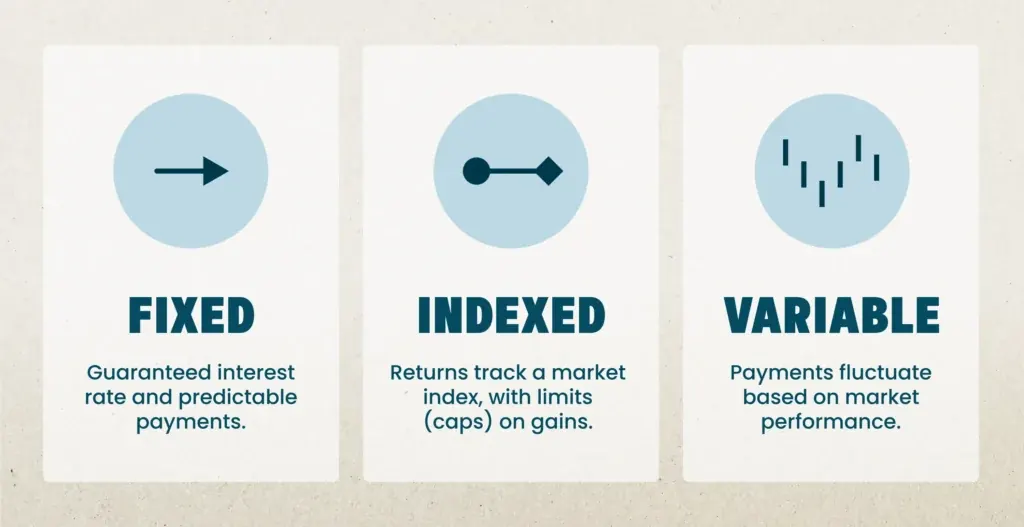
Fixed Annuities: The insurance company credits your account with a stated interest rate, similar to a CD but typically with higher rates in exchange for longer commitment periods and withdrawal restrictions.
Indexed Annuities: Your returns tie to a market index but with caps on gains and protection against losses. The insurance company invests your money and uses complex derivative strategies to provide this protected exposure.
Variable Annuities: Your money invests in sub-accounts similar to mutual funds, exposing you to market gains and losses. The insurance company provides the investment structure but your account value fluctuates with market performance.
In all cases, the insurance company is investing your money in stocks, bonds, real estate, and other assets to generate returns exceeding what they promise you. Their profit comes from this spread.
The Income Phase
When you annuitize and convert your account value to lifetime income, the insurance company uses actuarial calculations to determine payment amounts based on:
Your Life Expectancy: They estimate how long you'll live based on age, gender, and health factors. The longer your expected lifespan, the smaller your monthly payment.
Investment Returns: They project returns on the lump sum they're holding to fund your payments. Higher expected returns allow higher payment amounts.
Their Profit Margin: They build in profit for the company, ensuring they make money even after paying your guaranteed income.
Mortality Credits: This is where annuities differ from simple systematic withdrawals. People who die earlier than expected subsidize payments to those who live longer. The insurance company pools longevity risk across many annuity holders.
Your lifetime income isn't magic or free money. It's your own principal plus investment earnings, spread across your expected lifespan, subsidized by those who don't live as long, and reduced by insurance company fees and profit.
Where Safety Claims Come From
The "safety" of guaranteed income stems from the insurance company's obligation to continue payments regardless of how long you live or how investments perform. They've accepted the longevity risk and investment risk.
However, this guarantee depends entirely on the company remaining solvent and able to meet its obligations. You've traded the uncertainty of market performance for the certainty of receiving promised payments, but that certainty relies on counterparty strength.

Are Annuities a Good Investment? A Balanced Assessment
The question of whether annuities represent good investments depends heavily on individual circumstances and what you're trying to accomplish.
Situations Where Annuities May Make Sense
Longevity Insurance
If your primary concern is outliving your assets and you have no pension or other guaranteed income beyond Social Security, annuities can provide peace of mind. The guaranteed lifetime payments eliminate longevity risk, even if the trade-offs are substantial.
Lack of Investment Discipline
Some people struggle with systematic withdrawal discipline and might spend retirement savings too quickly without external structure. Annuities force spending restraint through contractual restrictions.
Desire for Simplicity
Despite their complexity, annuitized contracts ultimately provide simple, predictable monthly income without requiring ongoing management decisions or market monitoring.
Specific Tax Situations
In limited circumstances, the tax-deferred growth of non-qualified annuities provides benefits not available through other structures, though these situations are narrow and often overstated by salespeople.
Why Annuities May Not Be the Best Option
High Costs Relative to Alternatives
The fees and surrender charges built into annuities often exceed what you'd pay for comparable outcomes through other investment approaches. You're paying for guarantees that may not be worth their cost.
Inflexibility
Life changes in ways you cannot predict. Annuities lock you into decisions made years earlier, preventing adaptation to new circumstances, opportunities, or needs.
Inferior Inflation Protection
The inflation risk inherent in fixed payments often outweighs the security of knowing payment amounts. Your safe income becomes insufficient as living costs rise.
Complexity and Opacity
The difficulty of understanding and comparing annuity products means many investors purchase inappropriate products based on sales presentations rather than careful analysis of their actual needs.
Opportunity Cost
Money committed to annuities with their restrictions and fees cannot be deployed in potentially superior alternatives offering better returns, lower costs, or greater flexibility.
Tax Inefficiency
Annuity distributions face ordinary income tax treatment on earnings rather than the preferential capital gains rates available on other investments. This tax drag reduces net returns significantly for investors in higher brackets.
Alternative to Annuities for Retirement Income
Before committing to an annuity, consider whether these alternatives might better serve your retirement income needs.
IRS Early Withdrawal Penalties
Separate from insurance company surrender charges, the IRS imposes its own 10% penalty on annuity withdrawals taken before age 59½. This applies to the earnings portion of your withdrawal, not the principal you invested with after-tax dollars (in non-qualified annuities).
The IRS treats annuities as retirement savings vehicles and penalizes early access just like they do with 401(k)s and IRAs.
Dividend-Focused Stock Portfolios
Quality dividend-paying stocks provide several advantages over annuities. Companies with long histories of paying and increasing dividends offer growing income streams that keep pace with or exceed inflation. Unlike fixed annuity payments, dividend income tends to rise over time as profitable companies share earnings growth with shareholders.
This approach provides complete liquidity. You can access your principal at any time by selling shares without surrender charges or contractual penalties. Market value fluctuates, creating volatility that annuities avoid, but long-term dividend growth and principal appreciation typically compensate for short-term price movements.
Dividend income also receives favorable tax treatment. Qualified dividends face lower tax rates than the ordinary income rates applied to annuity distributions, improving after-tax returns significantly.
The trade-off is assuming market risk and requiring more active engagement with your investments. You must tolerate portfolio value fluctuations and make decisions about when to sell shares for additional income beyond dividends.
Hedge Funds and Alternative Strategies
Constructing a bond ladder involves purchasing individual bonds with staggered maturity dates, creating a schedule of predictable interest payments and principal returns.
This strategy provides annuity-like income certainty with superior liquidity and transparency. You know exactly what you own, what each bond pays, and when principal returns. No complex contracts, no surrender charges, no insurance company counterparty risk.
Bond ladders work particularly well for conservative investors who prioritize principal protection and predictable cash flow. Investment-grade corporate bonds or government securities provide high safety with clear terms. As bonds mature, you can reinvest at current rates or use the principal for other needs.
The primary disadvantage is that bond ladders require more initial capital to properly diversify across multiple issuers and maturities. They also lack the longevity insurance aspect of annuities - your money will eventually be exhausted if you live long enough.
Systematic Withdrawal from Diversified Portfolios
Research suggests that systematic withdrawals from diversified stock and bond portfolios often outperform annuity purchases over retirement time horizons. The traditional 4% withdrawal rule, while debated, provides a framework for sustainable retirement spending without annuitizing.
This approach maintains complete control and flexibility. You adjust withdrawal rates based on market conditions, personal needs, and changing circumstances. Your heirs inherit remaining assets rather than losing everything to an insurance company when you die.
Portfolio-based withdrawals require more active management and tolerance for uncertainty. You face sequence-of-returns risk that could deplete assets faster than expected if poor market performance occurs early in retirement. However, the upside potential and flexibility often justify these risks for investors comfortable with periodic review and adjustment.
Land-Backed Investment Funds
For investors seeking passive income with real asset backing, land-backed investment funds represent an alternative worth considering. These funds invest in commercial land, typically in high-growth markets, with strategies focused on value enhancement through rezoning and development preparation.
Unlike annuities where your principal funds insurance company promises, land-backed funds invest in tangible real estate assets. You're not depending on counterparty guarantees but rather on the underlying value of real property in growing markets.
Many land-backed fund structures provide monthly income distributions without surrender charges or long-term lock-up periods, offering better liquidity than annuities. Investors may receive both regular income and participation in property appreciation when assets sell, combining cash flow with growth potential.
The risk profile differs from annuities. You face real estate market risk, development execution risk, and the general uncertainties of property investment. However, you avoid the counterparty risk, fee drag, and inflation vulnerability inherent in annuity structures.
This alternative suits investors comfortable with real estate as an asset class who prefer tangible asset backing over insurance company promises.
Combining Approaches for Balanced Security
Rather than committing entirely to annuities or entirely to alternatives, many retirees benefit from combining strategies. You might annuitize a portion of savings to cover essential expenses, ensuring basic needs are met regardless of market conditions, while maintaining more flexible investments for discretionary spending and legacy goals.
This hybrid approach balances the security of guaranteed income against the growth potential and flexibility of market-based investments. You've protected your downside without sacrificing all upside opportunity or liquidity.
The appropriate mix depends on your specific situation: risk tolerance, income needs, other guaranteed income sources, health status, legacy objectives, and personal preferences about control versus certainty.
Evaluating Annuity Safety for Your Situation
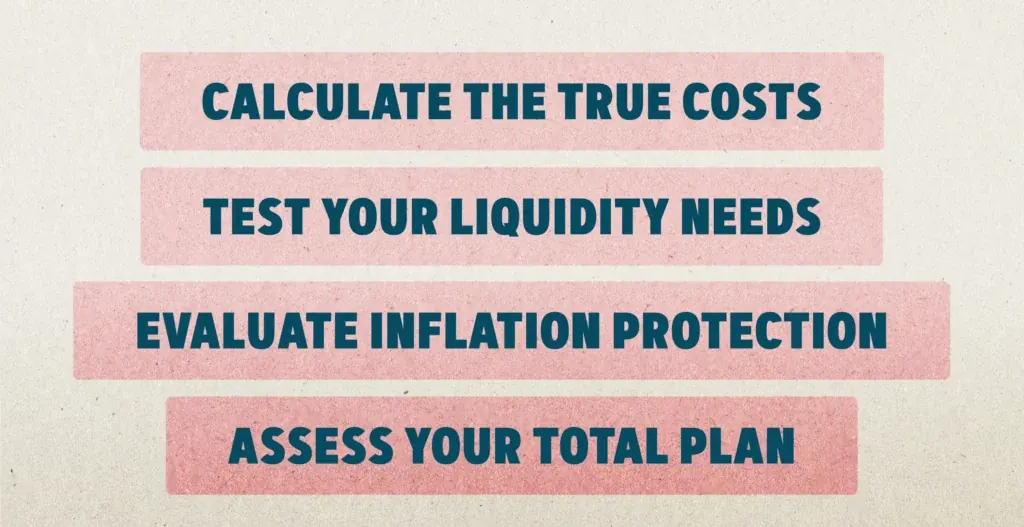
If you're considering an annuity despite the alternatives, use this framework to assess whether it genuinely provides the safety you need.
Assess the Insurance Company's Financial Strength
Check ratings from multiple independent agencies including A.M. Best, Moody's, Standard & Poor's, and Fitch. Look for companies rated A+ or better across multiple rating services. One high rating isn't sufficient - you want consensus about financial strength.
Review the company's history and stability. How long have they been in business? How did they perform during previous financial crises? What is their market position and competitive standing?
Remember that even highly rated companies can face difficulties. Diversifying across multiple insurance companies if you must purchase annuities reduces concentration risk.
Calculate the True Costs
Add up all costs over the expected holding period: surrender charges if you might need access, annual fees for variable or indexed products, rider costs for inflation protection or enhanced death benefits, and the opportunity cost of forgone returns from alternative investments.
Compare these total costs to the value of guarantees provided. Are you paying 2% to 3% annually in fees for benefits worth less than that? Are surrender charges reasonable relative to free withdrawal provisions?
Get detailed fee schedules in writing and run scenarios showing cumulative costs over 10, 20, and 30 years.
Test Your Liquidity Needs Honestly
Can you truly afford to lock up this money for the surrender period? Have you maintained adequate emergency reserves outside the annuity? What if health issues arise requiring expensive care? What if family situations change in ways you cannot anticipate?
Be conservative in estimating how much you can safely commit to illiquid products. The cost of being wrong is steep.
Evaluate Inflation Protection Realistically
If choosing fixed payments, calculate the purchasing power erosion over your expected retirement. A payment that seems adequate today may prove insufficient in fifteen or twenty years.
If adding inflation riders, understand the cost and whether that same money might be better deployed in assets that naturally appreciate with inflation.
Consider Your Total Financial Picture
An annuity might be appropriate for part of your portfolio but dangerous if it represents too large a percentage of your total assets. What other income sources do you have? What other liquid assets can you access? How does this annuity fit into your overall retirement plan?
Never let an annuity purchase be an isolated decision divorced from comprehensive financial planning.
The Bottom Line: Safety Requires Understanding All Risks
Are annuities safe? The answer is nuanced. They provide certain forms of safety - principal protection in fixed products, guaranteed lifetime income if annuitized, predictable payment amounts - while exposing you to other significant risks including liquidity constraints, inflation erosion, counterparty dependence, and high costs.
How annuities generate income involves insurance companies investing your money, using actuarial calculations to spread it across your lifetime, and building in their profit margins. The guarantees you receive depend entirely on the issuing company's financial strength and willingness to honor contracts potentially spanning decades.
Whether annuities represent good investments depends on your specific circumstances and what trade-offs you're willing to accept. For some investors facing genuine longevity concerns with no other guaranteed income, annuities serve a purpose. For many others, the combination of high costs, poor liquidity, inflation vulnerability, and complexity makes alternatives more attractive.
The critical insight is that "safety" in investing isn't one-dimensional. An investment can be safe from market volatility while being unsafe from inflation, liquidity constraints, or counterparty risk. Annuities typically excel at eliminating longevity risk and market timing concerns while introducing or exacerbating other forms of risk.
Before purchasing an annuity, thoroughly understand all the risks it presents, not just the ones it eliminates. Compare total costs to available alternatives. Assess whether the guarantees justify the restrictions and expenses. Ensure the insurance company backing your contract is financially sound. And most importantly, never commit more of your retirement savings to illiquid, complex products than you can genuinely afford to lock away for years or decades.
True financial safety in retirement comes from diversification across multiple income sources, maintaining adequate liquidity for unexpected needs, protecting purchasing power against inflation, and preserving flexibility to adapt as circumstances change. For most investors, this balanced approach serves better than concentrating assets in products that solve one problem while creating others.
Important Disclosure: This article is for educational purposes only and does not constitute financial advice. Past performance does not guarantee future results. All investments carry risk. Please consult with a qualified financial professional before making investment decisions.