
15 min read
When does an Annuity make sense - and when it doesn’t
Written on June 25, 2026 By Ron McVaney
Ready to start investing in Texas real estate?
Book Your Free Call Today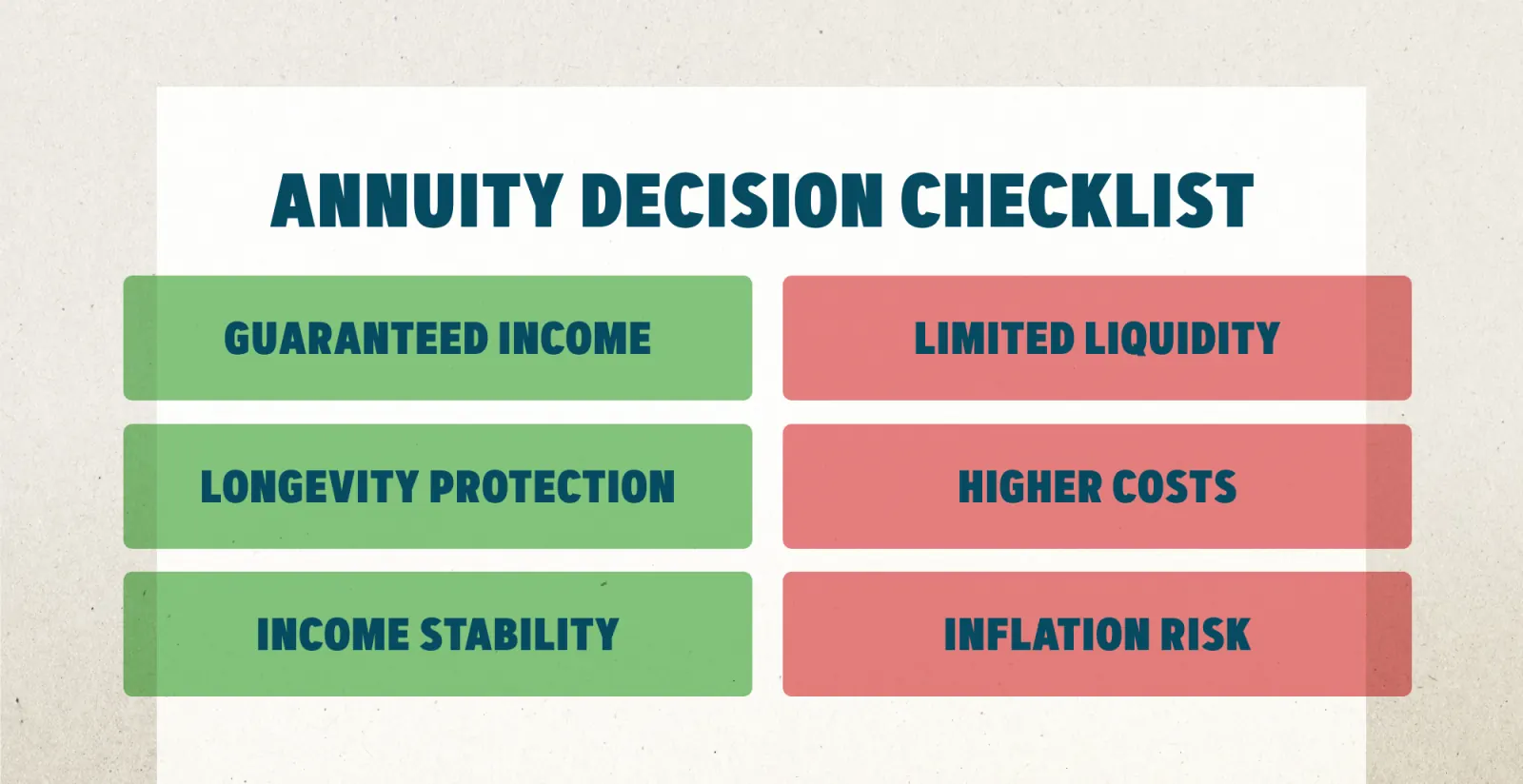
The question isn't whether annuities are universally good or bad. Financial products are tools, and like any tool, their value depends on whether they're the right fit for your specific situation. An annuity that serves one person's needs perfectly might be completely inappropriate for someone else with different circumstances.
The more useful question is: when does an annuity make sense for your particular situation, and when doesn't it? Understanding the specific circumstances where annuities provide genuine value versus situations where they create more problems than they solve helps you make informed decisions about whether these complex products belong in your retirement plan.
This guide provides a practical decision framework for evaluating annuities based on your unique circumstances, goals, and alternatives rather than relying on general claims about whether annuities are "good" or "bad" investments.
The Decision Framework: How to Think About This Question
Before diving into specific scenarios, understanding how to approach the annuity decision provides the foundation for sound judgment.
Start With Your Goals
What problem are you trying to solve? Annuities address specific concerns:
- Fear of outliving your money (longevity risk)
- Need for guaranteed income beyond Social Security
- Desire for forced savings discipline
- Tax deferral in specific situations
If annuities don't address a real problem you face, they probably don't make sense regardless of how they're marketed.
Consider Alternatives First
For almost every goal annuities address, alternatives exist with different trade-offs. Before deciding an annuity makes sense, evaluate whether simpler, less expensive, or more flexible alternatives might serve you better.
Understand Total Costs
Annuity costs include obvious fees, surrender charges, opportunity costs from underperformance, and inflation erosion of fixed payments. Calculate total costs over your expected retirement, not just annual percentages that sound reasonable in isolation.
Assess Your Flexibility Needs
Annuities eliminate flexibility through surrender charges and, if annuitized, permanent loss of principal access. Honestly evaluate whether you can afford to lock up money for a decade or more without access for emergencies, opportunities, or changing circumstances.
This framework—goals, alternatives, costs, flexibility—provides the lens through which to evaluate whether annuities make sense for you.
When Annuities Make Sense: Specific Circumstances
Annuities serve genuine purposes in specific, limited circumstances. Understanding these helps identify if you're in a situation where annuities might be appropriate.
You Have No Other Guaranteed Income
If you have no pension, minimal Social Security, and deep anxiety about outliving your assets, annuities' guaranteed lifetime income addresses a real need that few alternatives match.
This applies particularly if:
- You're in good health with family longevity suggesting a long retirement
- You have no heirs you want to leave assets to
- The guaranteed income provides psychological peace that allows you to actually enjoy retirement rather than constantly worrying about running out of money
In this narrow situation, converting a portion (not all) of your savings to guaranteed lifetime income might justify the costs and loss of flexibility.
You Completely Lack Spending Discipline
Some people cannot resist spending available money regardless of long-term consequences. If you've demonstrated inability to maintain systematic withdrawals without depleting accounts too quickly, annuities' forced structure provides value.
This makes sense only if:
- You acknowledge the discipline problem honestly
- You've tried and failed with less restrictive approaches
- Someone you trust agrees this is necessary
- You annuitize only enough to cover essential expenses, maintaining other assets for flexibility
Annuities function as forced discipline, but at high cost. Use them for this purpose only if you've genuinely exhausted alternatives.
You Have Truly Excess Capital Beyond All Conceivable Needs
If you have substantial assets beyond what you'll ever need for yourself, family, or any foreseeable circumstance, using a small portion for guaranteed income carries little downside risk.
This scenario is rare. Most people who think they have excess capital discover needs arise over 20 to 30 year retirements. But if you genuinely have more money than you could possibly use, annuitizing a portion for supplemental guaranteed income imposes minimal cost relative to your total wealth.
Specific Tax Situations Make Deferral Valuable
In narrow circumstances, annuity tax deferral provides genuine value:
- High current income but expecting significantly lower tax brackets in retirement
- Non-qualified annuities where you've maxed other tax-advantaged accounts
- Specific estate planning situations requiring complex analysis
These situations are uncommon and require professional tax advice to validate. Don't purchase annuities for tax deferral based on agent claims—verify with a tax professional who doesn't sell annuities.
You're Purchasing Immediate Annuities at Optimal Ages
Immediate annuities purchased at ages 70 to 75 or later, when mortality credits are most valuable and you're not locking in for extremely long periods, can make sense for portions of portfolios.
This works better than deferred annuities purchased young because:
- Shorter time horizon reduces inflation risk
- Mortality credits (subsidies from those who die early) are more valuable at older ages
- Less time for fees to compound
- You maintain flexibility longer before committing
Even then, annuitize only a portion covering essential expenses, keeping remaining assets flexible.
When Annuities Don't Make Sense: Specific Circumstances
For most people in most situations, annuities create more problems than they solve. Understanding when they don't make sense helps avoid expensive mistakes.
You're Young or Middle-Aged
Purchasing annuities in your 40s, 50s, or even early 60s locks you into decades-long commitments when circumstances will change dramatically. The surrender periods, inflation vulnerability, and opportunity costs over such long horizons make annuities poor choices for younger purchasers.
Wait until at least your late 60s or 70s before considering annuities, preserving flexibility during the years when you need it most.
You Don't Fully Understand the Product
If you cannot clearly explain how the annuity works, what fees you're paying, what surrender charges apply, how the crediting method functions, and what you're giving up, don't buy it.
Complexity that obscures understanding almost always benefits the seller more than the buyer. Walk away from any annuity you don't completely understand, regardless of how attractive the agent makes it sound.
You Have Liquidity Needs or Uncertain Circumstances
If you might need money for:
- Medical expenses beyond insurance coverage
- Long-term care costs
- Helping family members
- Business or investment opportunities
- Relocations or major life changes
Annuities' surrender charges and illiquidity make them inappropriate. Keep money accessible until you're certain you won't need it for a decade or more.
You're Concerned About Inflation
Fixed annuities with level payments are terrible choices if inflation concerns you. The purchasing power erosion over 20 to 30 years devastates fixed income.
Inflation-adjusted annuities reduce initial payments so drastically that you sacrifice substantial near-term income for future protection that may not materialize as promised.
If inflation protection matters, annuities are generally the wrong tool.
You Have Heirs You Want to Provide For
Annuities, especially life-only options providing highest payments, leave nothing for heirs. When you die, remaining value goes to the insurance company, not your children or other beneficiaries.
If leaving a legacy matters, maintain assets in forms that pass to heirs rather than converting them to annuities that disappear at death.
You Can Manage Systematic Withdrawals
If you can follow a systematic withdrawal plan from diversified investments—taking 3% to 4% annually and adjusting for market conditions—you likely don't need annuities' expensive guaranteed income.
Research suggests properly managed withdrawal strategies often provide better outcomes than annuitization while maintaining flexibility and preserving capital for heirs.
The Fees and Costs Are High
Variable annuities charging 2.5% to 4% annually, or any annuity with surrender charges exceeding 5% or lasting longer than seven years, are poor choices for almost everyone.
If the fees are high, the costs outweigh the benefits for virtually all purchasers regardless of circumstances.
You're Being Pressured to Decide Quickly
Any pressure to purchase immediately, without time for careful analysis, comparison shopping, and consultation with others, should trigger rejection.
Legitimate annuity purchases can wait days or weeks for proper evaluation. Pressure tactics indicate the agent's interests outweigh yours.
Annuity vs Life Insurance: Understanding the Difference
Many people confuse annuities and life insurance because both are insurance products, but they serve opposite purposes and function completely differently.
Fundamental Purpose Difference
Life insurance protects against dying too soon. You pay premiums to ensure your family receives a death benefit if you die prematurely, replacing the income and financial support you would have provided.
Annuities protect against living too long. You pay a lump sum to ensure you receive income for as long as you live, preventing you from outliving your money.
They're financial opposites addressing different risks.
When Payments Occur
Life insurance pays beneficiaries after your death. The insurance company pays out when you die, not while you live.
Annuities pay you during your life. The insurance company makes payments while you're alive, stopping when you die (except for period-certain options).
Who Receives the Money
Life insurance benefits go to your designated beneficiaries—typically spouse, children, or other heirs.
Annuities pay you, the contract owner. Benefits are for your lifetime, not for heirs (though some options provide survivor benefits at reduced payment rates).
When Each Makes Sense
Life insurance makes sense when you have dependents relying on your income. Young families, parents with children, anyone with significant financial obligations to others needs life insurance.
Annuities make sense (in limited circumstances) for retirees concerned about longevity risk who have no dependents and want guaranteed income.
Why Confusion Exists
The confusion stems from several factors:
- Both sold by insurance agents and insurance companies
- Cash value life insurance has accumulation features similar to annuity accumulation phases
- Some products combine features, creating hybrid confusion
- Marketing materials don't always clearly distinguish purposes
Understanding this fundamental difference prevents purchasing the wrong product for your needs—like buying life insurance when you need retirement income, or annuities when you need death benefit protection.
Best Annuities for Retirement: Which Type If You Decide to Buy
If you've determined annuities make sense for your specific situation, understanding which type typically provides the best value helps avoid the worst products.
Generally: Fixed Immediate Annuities at Older Ages
For most people in circumstances where annuities are appropriate, fixed immediate annuities purchased at age 70 or later offer the best combination of:
- Simple, understandable structure
- Lower fees than variable or indexed annuities
- Immediate income without long accumulation periods
- Shorter commitment timeframe reducing inflation risk
- Better mortality credits at advanced ages
Avoid: Variable Annuities in Most Cases
Variable annuities combine market risk with insurance costs, typically delivering the worst of both worlds:
- High fees (2% to 4% annually) that drag returns
- Market exposure you could get cheaper through mutual funds
- Complexity that obscures true costs
- Expensive optional riders with questionable value
Unless you have very specific, unusual circumstances requiring variable annuity features, avoid them.
Approach With Caution: Indexed Annuities
Indexed annuities use complex crediting methods that make comparison and evaluation extremely difficult. The caps, participation rates, and spreads typically deliver returns lower than direct index investing while imposing surrender charges and restrictions.
If considering indexed annuities, get independent analysis from someone who doesn't sell them before purchasing.
Consider: Deferred Income Annuities (DIAs)
For people in their 60s wanting guaranteed future income starting at 75 or 80, deferred income annuities provide income certainty without requiring funds immediately.
These work better than immediate annuities if you're not ready for income now but want future protection, and better than deferred variable annuities due to simpler structure and lower costs.
Key Features to Seek
Regardless of type, look for:
- Surrender periods under seven years
- Total annual costs under 1.5%
- Simple, understandable crediting methods
- Strong insurance company financial ratings from multiple agencies
- Ability to fully explain how the product works
Avoid products you don't understand, regardless of promised benefits.
Pros and Cons in Decision Context
Understanding pros and cons matters less than understanding which pros matter for your situation and whether cons disqualify the product.
Pros That Might Justify Purchase
- Guaranteed lifetime income for those with genuine longevity risk and no other guaranteed income sources
- Forced discipline for those who've demonstrated inability to manage withdrawals responsibly
- Psychological peace for those who can't sleep knowing investments fluctuate
- Longevity insurance for those in excellent health expecting very long retirements
These pros provide value only if they match your specific needs.
Cons That Often Disqualify Purchase
- High costs (2% to 4% annually) that compound over decades
- Illiquidity through surrender charges lasting 7 to 10+ years
- Inflation vulnerability that erodes purchasing power relentlessly
- Complexity that obscures true costs and limitations
- Loss of control preventing adaptation to changing circumstances
These cons affect everyone, making annuities inappropriate for most people regardless of pros.
The Balance for Your Situation
The key question isn't whether pros outweigh cons generally, but whether specific pros that matter for your situation outweigh cons that will definitely impact you.
Why Annuities May Not Be the Best Option for Most People
While annuities serve genuine purposes in limited circumstances, several factors make them inappropriate for most retirement savers.
Better Alternatives Exist for Common Goals
Nearly every goal annuities address has alternatives with fewer drawbacks:
- Lifetime income: Social Security plus systematic withdrawals
- Market protection: Bond ladders, treasury securities, CDs
- Tax deferral: 401(k)s, IRAs without annuity costs
- Guaranteed returns: FDIC-insured products with better backing
These alternatives avoid annuities' high costs, surrender charges, and complexity.
Costs Exceed Benefits for Typical Investors
For people with reasonable financial discipline, moderate risk tolerance, and normal liquidity needs, annuity costs—fees, surrender charges, opportunity costs, inflation erosion—typically exceed the value guarantees provide.
Circumstances Change Over Decades
Twenty to thirty year retirements span enormous life changes. Products requiring decade-long commitments made when circumstances were different often become unsuitable before surrender periods end.
This inflexibility creates problems for most people, making annuities poor matches for the reality of long, uncertain retirements.
Industry Incentives Misalign With Investor Interests
Agents earn large commissions (5% to 8%) for selling annuities, creating powerful incentives to recommend them whether or not they serve your interests. This misalignment results in many inappropriate annuity purchases.
Alternatives to Annuities for Retirement Income
For most people concluding annuities don't make sense for their situation, several alternatives provide retirement income without annuities' disadvantages.
Systematic Withdrawal Plans
Creating your own "annuity" through systematic withdrawals from diversified portfolios provides income while maintaining flexibility, controlling costs, and preserving capital for heirs.
The 4% rule and its variations provide frameworks for sustainable withdrawal rates that research suggests often outperform annuity purchases over full retirement periods.
Bond Ladders
Purchasing individual bonds with staggered maturity dates creates predictable income streams with known maturity values, complete transparency, and no surrender charges.
Bond ladders provide annuity-like predictability with superior liquidity and simpler structure.
Dividend Growth Portfolios
Quality dividend-paying stocks provide growing income that naturally keeps pace with inflation—something fixed annuities cannot match.
While stock prices fluctuate, dividend income from established companies tends to grow over time, protecting purchasing power without expensive inflation riders.
Real Estate Income Investments
Real estate provides income from tangible assets rather than insurance company promises, with natural inflation protection as property values and rents tend to rise with general price levels.
For investors seeking passive real estate exposure, land-backed investment funds offer monthly distributions from actual property operations and sales. Unlike annuities where you surrender principal for income promises, real estate investments maintain underlying asset value while generating cash flow.
These investments are backed by tangible Texas commercial land rather than insurance contracts, providing asset-backed security without surrender charges, high fees, or the inflexibility that makes annuities inappropriate for most investors.
Combining Approaches
Rather than committing entirely to one approach, combining strategies often serves better than any single method:
- Maintain liquid stocks and bonds for flexibility and growth
- Use bond ladders for predictable near-term income
- Hold real estate for inflation protection and diversification
- Reserve small portions for immediate annuities if genuine longevity concerns warrant it
This diversified approach captures benefits while avoiding over-commitment to any single strategy's limitations.
The Decision Checklist: Making Your Choice
Use this checklist to evaluate whether annuities make sense for your specific situation:
Annuities Might Make Sense If:
☐ You're 70+ years old
☐ You have no pension and minimal Social Security
☐ You're in excellent health expecting very long retirement
☐ You have no heirs you want to provide for
☐ You have truly excess capital beyond all conceivable needs
☐ You've exhausted all alternatives and still have unaddressed longevity concerns
☐ You fully understand the product you're considering
☐ Total costs are under 1.5% annually
☐ Surrender period is under seven years
Annuities Probably Don't Make Sense If:
☐ You're under 65 years old
☐ You might need access to money in next 10 years
☐ You don't fully understand the product
☐ Total costs exceed 2% annually
☐ Surrender charges exceed 7% or last longer than seven years
☐ You're concerned about inflation eroding purchasing power
☐ You want to leave assets to heirs
☐ You're capable of managing systematic withdrawals
☐ You're being pressured to decide quickly
☐ The agent can't clearly explain all costs and limitations
If you check more boxes in the second list than the first, annuities probably aren't appropriate for your situation.
The Bottom Line: It Depends, But Usually No
Whether annuities make sense depends entirely on your specific circumstances, goals, and alternatives. For the limited situations where annuities address genuine needs that alternatives cannot—primarily providing guaranteed lifetime income for older individuals with no other guaranteed income sources and no need to preserve capital for heirs—they can serve valuable purposes.
However, for most people in most situations, the combination of high costs, inflexibility, inflation vulnerability, complexity, and loss of control makes annuities poor choices relative to available alternatives. The circumstances where annuities truly make sense are narrow and specific, while the situations where they don't make sense encompass the majority of retirement savers.
The decision framework is simple: start by understanding your goals, evaluate alternatives that might serve those goals with fewer limitations, calculate total costs honestly, and assess whether you can afford the inflexibility annuities impose. For most people working through this framework, the conclusion will be that annuities don't make sense for their situation.
If you determine annuities are appropriate, choose simple structures (fixed immediate annuities at older ages) over complex products (variable or indexed), keep total costs under 1.5% annually, ensure surrender periods don't exceed seven years, and annuitize only a portion of assets while maintaining flexibility elsewhere.
But recognize that reaching the conclusion that annuities make sense for you should be the exception rather than the rule, occurring only after careful analysis reveals genuine needs that alternatives cannot address and circumstances that allow accepting annuities' significant limitations.
For the majority of retirement investors, alternatives to annuities for retirement—systematic withdrawals, bond ladders, dividend portfolios, and real estate income strategies—provide better outcomes with greater flexibility, lower costs, and fewer ways to lose money over long retirement horizons.
Important Disclosure: This article is for educational purposes only and does not constitute financial advice. Past performance does not guarantee future results. All investments carry risk, including the potential loss of principal. Please consult with a qualified financial professional before making investment decisions.